
Key Insights
Quick Answer
Provably fair uses cryptographic seeds and hashes so you can verify certain game outcomes weren’t changed after you placed your bet.
Best Way To Get Better Results
Verify a few rounds on your first session so you know how the casino’s provably fair tool works before you play bigger.
Biggest Advantage
You can independently check supported results instead of relying only on “trust us” claims about fairness.
Common Mistake
Assuming provably fair means the whole casino is trustworthy, even if withdrawals, terms, and support are questionable.
Pro Tip
Use provably fair mainly for in-house games (dice, crash, mines-style) and treat it as one trust layer, not the only one.
What “Provably Fair” Means In Plain English
Provably fair is a system that lets you confirm a game outcome wasn’t changed after you placed your bet. Instead of “just trust our RNG,” the casino gives you a way to verify the result using cryptography.
This matters most for casino originals like:
- dice
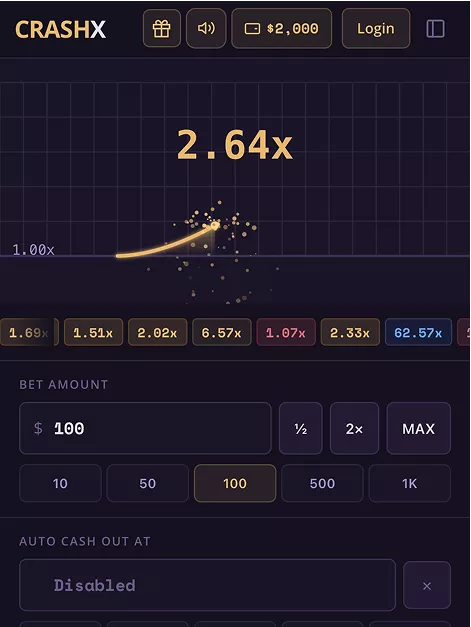
- crash
- limbo
- mines-style games
- some in-house roulette variants
It’s less common for third-party slots because those outcomes typically come from the game provider’s RNG, not the casino’s provably fair tool.
What Provably Fair Does And Does Not Protect
Provably fair can protect you from:
- a casino changing the result after seeing your bet
Provably fair does not automatically protect you from:
- slow or denied withdrawals
- unfair bonus terms
- shady customer support
- unclear licensing
It verifies outcomes for supported games. It doesn’t guarantee the operator is good.
How Blockchain Relates To Provable Fairness
Blockchains don’t always “run” the provably fair system directly, but blockchain culture is why players expect verification.
Crypto players can already verify payments on-chain. That naturally creates a second expectation: “If I can verify deposits and withdrawals, why can’t I verify outcomes too?”
Provably fair is one answer to that expectation. It uses cryptographic commitments that are conceptually similar to how blockchains rely on signatures and hashes.
If you want the broader “how blockchain powers crypto casinos” context, read How Blockchain Technology Powers Crypto Casinos
The Three Ingredients Behind Provably Fair
Most provably fair systems use three key pieces:
Server Seed
A secret value the casino generates. The casino commits to it before play by publishing a hash of that seed.
Client Seed
A value tied to the player. Some casinos let you set it. Some assign it automatically. Either way, it becomes part of the outcome generation.
Nonce
A counter that changes each round. It prevents the same seed pair from producing the same result every time.
These inputs combine to produce a result that can be reproduced later. That’s the “provable” part.
How The Verification Flow Works Step By Step
Most crypto casinos give you a “Fairness” or “Provably Fair” page that shows your seeds and a verification tool.
Step 1: The Casino Commits To A Seed Before You Bet
The casino shows you a hashed server seed. You can’t see the raw seed yet, but the hash is a commitment. If the casino changes the seed later, the hash won’t match.
Step 2: You Play Using The Server Seed + Client Seed + Nonce
When you bet, the game uses those inputs to produce an outcome.
Step 3: After You Rotate Seeds, The Casino Reveals The Old Server Seed
When you change seeds (or after a session), the casino reveals the previously used server seed.
Step 4: You Verify The Hash Matches
You hash the revealed server seed and confirm it matches the originally published hash. That proves the casino didn’t swap the seed after the fact.
Step 5: You Reproduce The Outcome
Using the revealed server seed, your client seed, and the nonce, you reproduce the outcome and confirm it matches what happened in-game.
This is the core loop: commit → play → reveal → verify.
A Simple Example With Numbers
Let’s keep it practical.
You play a provably fair dice game with:
- Client seed: “Bryan123”
- Server seed hash: visible before play
- Nonce: starts at 1
You roll 10 times. The nonce increments each time (1 to 10). After you rotate seeds, the casino reveals the old server seed.
Now you verify:
- The revealed server seed hashes to the original hash you saw earlier
- Each roll outcome can be regenerated using the same inputs and the correct nonce
If the regenerated outcomes match, it’s strong evidence the casino didn’t alter results after your bets.
Common Traps To Watch For
Trap One: Thinking “Provably Fair” Applies To Every Game
It usually applies to in-house originals, not all slots and live dealer games. Always check what games are covered.
Trap Two: Not Understanding What You’re Verifying
You’re verifying that the result came from the committed inputs. You’re not verifying payout policies, withdrawal behaviour, or licensing.
Trap Three: Never Actually Checking It
Provably fair is only useful if you verify at least a few rounds, especially when testing a new casino. Otherwise it’s just a label.
How To Use Provably Fair The Smart Way
Provably fair is most useful as a “new casino test tool.”
A Practical Routine
- Pick an in-house provably fair game
- Play 10–20 small rounds
- Rotate seeds
- Verify a handful of outcomes
- Only scale up if everything checks out
This gives you confidence in the game integrity layer before you commit bigger bankroll.
Quick Checklist
Step 1: Confirm the game is actually provably fair (not just the casino brand claim).
Step 2: Locate your server seed hash, client seed, and nonce.
Step 3: Play a small sample of rounds and then rotate seeds.
Step 4: Verify the revealed server seed matches the original hash.
Step 5: Recompute a few outcomes to confirm results weren’t changed after bets.
FAQs About Provably Fair And Blockchain
Does Blockchain Itself Make Games Fair
Not automatically. Blockchain helps with transparency and payments. Provably fair uses cryptography to verify outcomes for certain games.
Can A Casino Still Be Sketchy With Provably Fair
Yes. Provably fair verifies outcomes for supported games, but it doesn’t guarantee fast withdrawals, fair terms, or legit licensing.
Do Provably Fair Systems Work For Slots
Sometimes for in-house slot-style games, but most provider slots rely on the provider’s RNG and testing standards, not provably fair verification.
Should I Verify Every Single Round
You don’t have to, but you should verify enough rounds to understand the system, especially when testing a new casino.
What If The Hash Doesn’t Match
That’s a major red flag. Stop playing, document what you see, and don’t deposit more until it’s explained clearly.
Where To Go Next
Now that you understand what provably fair verifies, the next step is learning why crypto casinos often deliver faster withdrawals and what can still slow them down.
Next Article: Why Crypto Casinos Often Offer Faster Withdrawals
Next Steps
If you want to start with the basics, read The Complete Guide to Crypto Casinos
If you want to go one step deeper, read Understanding Provably Fair Algorithms in Crypto Casinos
If your goal is to verify payment movement, use How Blockchain Explorers Help Verify Casino Transactions
Gridzy Hockey is Shurzy’s daily NHL grid game where you pretend you’re just messing around and then suddenly you’re 15 minutes deep arguing with yourself about whether some 2009 fourth-liner qualifies as a 40-goal guy.
If you think you know puck, prove it. Go play Gridzy Hockey right now!