
What You Need Before You Play
Online poker is easy to access, but a good setup prevents most beginner mistakes.
Quick Setup Checklist
- Stable internet (avoid weak mobile data if playing real money)
- A comfortable device (laptop/desktop is easiest for learning)
- A reputable poker site account
- A deposit method you trust (if playing for real money)
- A quiet session environment (so you don’t rush decisions)
A simple rule: if you feel rushed, distracted, or tired, you’ll click faster and think slower. That’s how most “bad sessions” start.
If you want the full series overview (formats, strategy basics, bankroll, and safety), start with Online Poker Guide: Rules, Strategy & Tips. This article focuses on what happens “under the hood” when you sit at an online table.
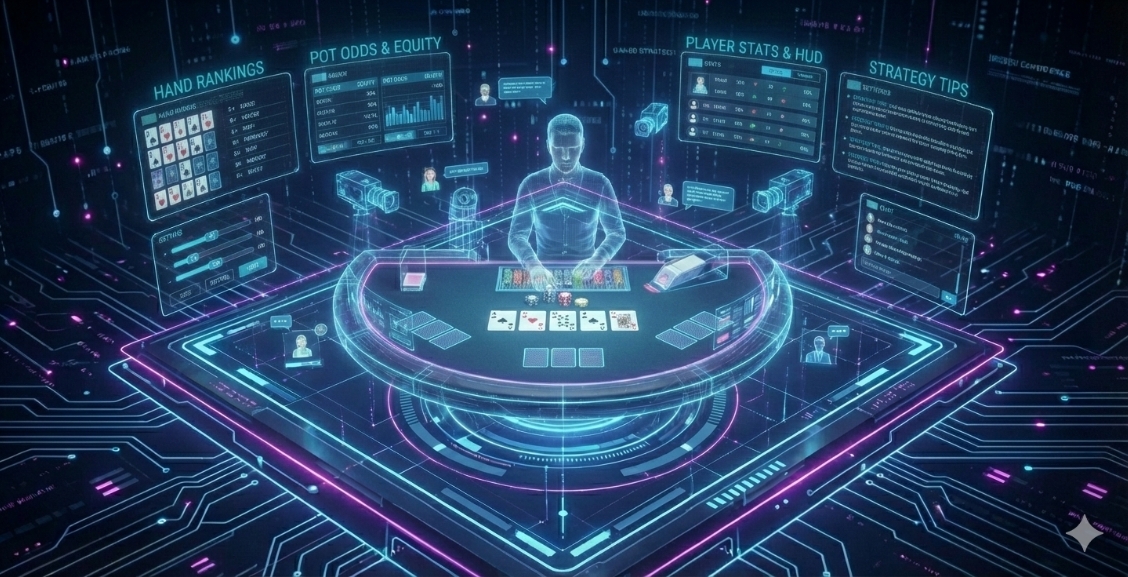
How Online Poker Software Runs The Game
In live poker, a dealer manages the action. Online, the software does it instantly and consistently.
Poker Software Typically Handles
- Seating and table limits (6-max, full ring, heads-up)
- Posting blinds automatically
- Dealing hole cards and community cards
- Enforcing action order (who acts when)
- Running decision timers and time banks
- Calculating pots and side pots
- Awarding the pot to the winner
- Saving hand histories for review
That’s why online poker feels smooth. It’s also why it’s easy to slip into autopilot if you’re not careful.
The Lobby: Picking The Right Table
The lobby is where you choose what to play. You’ll usually filter by:
- Game Type: cash games, tournaments, sit and gos, fast-fold
- Stakes/Buy-In: how expensive the game is
- Table Size: 6-max vs full ring
- Speed: regular vs turbo vs fast-fold
Beginner Tip: Start at micro stakes and pick tables with normal pacing. The goal is to learn the flow, not to chase action.
The Table Interface: What You’re Seeing
Most online poker tables show:
- Your hole cards (private cards)
- Community cards (in Hold’em/Omaha)
- The pot size
- Stack sizes (chip counts)
- The dealer button and blinds
- Action buttons (Fold, Call, Raise)
- A decision timer and time bank
Online feels simple because everything is visible. But the real skill is still decision-making—especially when you’re facing a bet.
How Cards Are Dealt Online (RNG In Simple Terms)
In live poker, a dealer shuffles and deals physical cards. Online poker uses an RNG (random number generator) to simulate a fair shuffle and deal.
What This Means For You
- Every hand is independent (you’re not “due” for a win)
- You’ll see more weird runouts because you play more hands per hour
- Variance shows up faster online than live
If online ever feels “crazier,” it’s usually speed + memory bias: you remember the painful hands more than the normal ones.
The Basic Flow Of A Hand (Texas Hold’em Example)
Most beginners start with Texas Hold’em, so we’ll use it as the example. The overall rhythm is similar across poker variants.
Step 1: Blinds Go In
Before any cards are dealt:
- Small Blind posts a forced bet
- Big Blind posts a larger forced bet
Blinds create action and ensure there’s always money in the pot to win.
Step 2: Hole Cards Are Dealt
Each player gets two private cards. You’ll use these with the community cards to make your best five-card poker hand.
Step 3: Betting Happens In Rounds
A Hold’em hand moves through:
- Preflop: you get your two cards, then betting starts
- Flop: three community cards appear, betting
- Turn: fourth community card, betting
- River: fifth community card, betting
- Showdown: best hand wins (if more than one player remains)
Online poker keeps this flow consistent every time. Your job is to understand what your options mean in each round.
The Four Actions You’ll Use Constantly
Most decisions come down to four actions:
- Fold: you give up the hand and stop investing chips
- Check: you pass the action (only if no one has bet)
- Call: you match the current bet
- Bet/Raise: you put in more chips (raise means increasing a bet)
Quick Example (So The Buttons Make Sense)
Blinds are 0.50/1.00. Someone raises to 3.00.
- If you Fold, you give up your hand and lose nothing (unless you were in a blind)
- If you Call, you put in 3.00 to see the next cards
- If you Raise, you increase the bet (example: to 9.00) to apply pressure or build a pot
The software makes the clicking easy. The hard part is choosing the right action with a clear reason.
Betting Structures: No-Limit, Pot-Limit, Fixed-Limit
Poker rooms may offer different betting rules. This changes how big bets can be.
No-Limit (Most Common)
You can bet any amount up to your full stack. Most online Hold’em is no-limit.
Pot-Limit (Common In Omaha)
You can bet up to the size of the pot. This keeps bet sizing more controlled than no-limit.
Fixed-Limit (Less Common)
Bet sizes are fixed. This can reduce volatility and make learning calmer, but it’s not offered everywhere.
Common Online Poker Features You Should Understand
Online poker adds tools that don’t exist in live poker. Used correctly, they help. Used mindlessly, they create leaks.
Time Bank And Timers
You’ll have a set time to act. If you’re unsure, use your time bank. Strong players don’t panic-click.
Auto-Post Blinds
Convenient, but remember: you pay blinds every orbit. If you’re distracted, you can bleed chips without realizing it.
Bet Size Buttons
Buttons like half-pot or pot can be helpful, but don’t let them think for you. Always ask: “Why am I betting here?”
Notes And Tags
Notes are one of the biggest long-term advantages online. Even simple notes matter.
Examples Of Useful Notes
- “Calls flop wide, folds turn often”
- “Only raises preflop with strong hands”
- “Bluffs missed draws on river”
Hand Histories
Hand histories record each hand so you can review decisions. This is a huge improvement advantage compared to live poker.
A beginner-friendly habit: save 3–5 hands after each session where you felt confused, then review them slowly.
Hand Rankings: The Minimum You Must Know
You don’t need to memorize everything at once, but you do need to know what beats what. If you’re shaky here, your decisions won’t be stable.
For a clear breakdown with real examples, read Understanding Poker Hand Rankings With Real Examples.
Quick Takeaways (So You Don’t Overthink It)
- Online poker is poker, but software makes it faster and more consistent
- Learn the hand flow (blinds → preflop → flop → turn → river → showdown)
- Your four actions are Fold, Check, Call, and Raise—choose with a reason
- Use time banks and notes to slow the game down mentally
- Review a few hands after sessions to improve faster than “just playing”
Mini FAQ
Is Online Poker Different From Live Poker?
The rules are the same, but online is faster and more repetitive, which makes mistakes show up quicker.
Why Does Online Poker Feel More Swingy?
Because you play more hands per hour. Variance appears more often in a shorter time window.
Do I Need Extra Tools To Play Online?
No. Start with fundamentals and one table. Tools can help later, but they’re not required to learn the basics.
Where To Go Next
You’ve now learned how online poker software runs the game, from blinds and betting rounds to dealing and payouts.
If you want to reinforce what you learned, the best next move is to see how the same rules feel different on a real casino table versus a screen—because that’s where most beginner mistakes show up (speed, distractions, and decision pressure).
Continue with The Difference Between Online Poker And Live Poker.



