Quick Answer:
- Best pick for more control: Table games (your choices can matter). Best pick for simple, fast action: machine games (tap, spin, done).
- Best time to decide: Before you sit down, before you set your budget, and before you claim a bonus.
- Biggest mistake: Thinking “table = always better odds” or “machines are rigged.” Both can be fair, and both can drain a bankroll if you play too fast.
- Pro tip: Start small, pick one game, and don’t learn brand-new rules with real money.
If you want a full breakdown of casino game types, check out the The Complete Guide to Casino Game Types.
You walk into a casino (or open a casino app) and it feels like two different planets. On one side, you’ve got tables with chips, dealers, and little crowds. On the other, you’ve got machines blinking at you like they know your name.
These casino game types look similar from far away, but they play very different up close. And that matters, because surprises are only fun when they’re on your birthday. In this guide, I’ll break it down in plain words, then help you pick what fits your mood, your time, and your budget tonight.
Table games vs machine games: what counts as what
Table games are the ones where you place chips (or place a bet on a table layout), and a dealer runs the action. The rules are clear and right there on the felt, and the game usually moves as a group. Classic examples: blackjack, roulette, baccarat, craps, and poker.
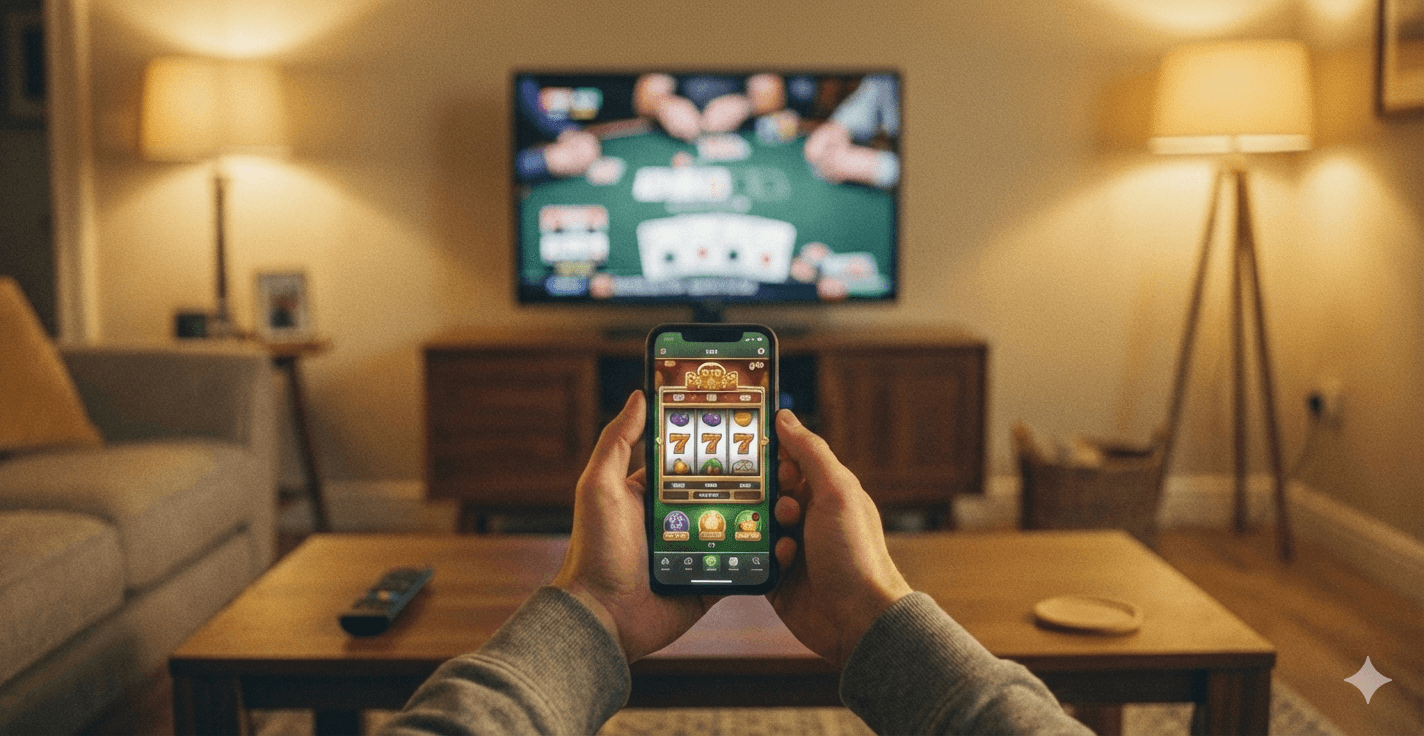
Machine games are the ones where you hit a button (or tap a screen), and the game spits out a result. Most of the time it’s just you vs the game. Quick examples: slots, video poker, keno terminals, digital scratch cards, and “crash” or other instant games.
One quick note: “machine” doesn’t only mean the big metal slot boxes on a casino floor. It also includes the digital stuff in casino apps, too. These are all part of the bigger types of casino games you’ll see anywhere you play.
Want the bigger map of everything out there? Read An Overview of All Casino Game Types (Complete Breakdown).
The 6 real differences that change how it feels to play
1) How results happen (RNG vs real-world gear)
Most machine games are RNG casino games, which means the game uses a random system to pick outcomes. Table games use real-world gear and steps: cards get shuffled, wheels get spun, dice get tossed, and the dealer follows a set process.
Real-life example: on roulette, you can watch the ball bounce and land. On a slot, you tap spin and the result pops up right away.
Takeaway: Both can be fair, but one feels “physical,” and the other feels “instant.” If that vibe matters to you, it’s a big deal.
The Difference Between RNG-Based and Live Casino Game Types
2) Chance vs skill (how much your choices matter)
This is the heart of chance vs skill casino games. In some games, your choices can change what happens next. In others, your main choice is just how much to bet.
Real-life example: in blackjack, hitting or standing can be the difference between staying alive or busting. In roulette, you pick a bet and hope the wheel loves you back. In most slots, you’re mainly picking your bet size and pressing spin. And poker is its own beast, because it’s one of the big multiplayer casino games where other players matter, not just the house.
Takeaway: If you like making calls and feeling involved, lean table. If you want pure “press button, see what happens,” lean machine.
For an easy breakdown of these casino game categories, see How Casino Games Are Categorized by Skill vs Luck.
3) Speed (fast-paced vs slower play)
Machines can be super quick. One tap, one result, repeat. That’s why they’re popular for fast-paced casino games. Table games move at the dealer’s pace, plus other players’ pace. That can be slower, and honestly, sometimes that’s a good thing.
Real-life example: you can rip through 50 slot spins while a blackjack table plays a handful of hands. And if you’re not paying attention, fast play can burn your budget before you even finish your drink.
Takeaway: Speed is fun, but it’s also sneaky. Faster game = faster spending if you’re not careful.
Fast-Paced vs Slow-Paced Casino Games Compared
4) Swings and “how wild it gets” (volatility)
Let’s talk about high volatility vs low volatility games. High volatility means bigger swings: long dry spells, then a big hit (maybe). Low volatility means smaller swings: more steady results, but usually fewer “holy wow” moments.
Real-life example: you can lose 20 spins fast on slots and feel like the machine just ghosted you. At many table games, you can sometimes “hover” longer with smaller ups and downs. But it’s not a perfect rule—roulette can swing hard, too, and side bets can turn calm games into chaos.
Takeaway: If you hate big mood swings, pick steadier games. If you love chasing a big moment, swingy games will feel exciting.
High-Volatility Game Types vs Low-Volatility Game Types
5) Social vibe (solo vs group energy)
Table games feel like a little hangout. There’s a dealer, there’s table talk, and you’re all riding the same wave. Machine games feel more solo, even if the room is loud. It’s you, your screen, and that one guy behind you who keeps breathing like a leaf blower.
Real-life example: at a busy blackjack table, people react together. At a slot bank, everyone’s in their own world, locked in like it’s a mission.
Takeaway: If you want group energy, go table. If you want quiet “me time,” go machine. Online chat can be kinda social, but it’s not the same as a real table.
Multi-Player Casino Game Types Explained
6) Rules, limits, and “what you can control”
Tables often come with minimum bets, table rules, and extra side bets. Machines usually let you change your bet in tiny steps, so they can be easier for budgeting. But they’re also easy to spam-spin when you’re bored, which is basically the gambling version of eating chips just because the bag is open.
Real-life example: a $15 blackjack table might be a hard “nope” if you only want to risk $5 a hand. Meanwhile, a slot might let you bet $0.20, $0.40, $0.60… nice and simple. Also, side bets: fun, but they change the risk and can make your money disappear faster.
Takeaway: Tables can feel more structured. Machines can feel more flexible. Pick what matches your budget, not your ego.
The Difference Between Mechanical, Digital & Hybrid Casino Games
The middle ground: live dealer game types and electronic tables
Live dealer game types are real dealers on video, and you tap buttons like an app to place bets. So you get real cards, real wheels, and real pacing… but it still feels like a “screen game” with timers, a clean layout, and a little less awkward small talk (which some people will call a win).
Then you’ve got ETGs (electronic table games). Think roulette or blackjack running on terminals. They’re often faster and cheaper than a full table, and you can play with less pressure.
This is also how table games “fit” on phones. A lot of mobile casino game types lean on live dealer or electronic versions to keep things smooth on a small screen.
Electronic Table Games (ETGs): What Players Should Know
So what should you play tonight? (quick pick guide)
Alright, quick friend-to-friend picks. No lectures.
If you want simple and fast: machine games. Start with low-stakes slots or instant win casino games so you can learn the flow without sweating it.
If you want to feel more in control: blackjack or baccarat-style table games. Keep it basic, skip the fancy extras, and just focus on the main bet.
If you want a social buzz: live dealer or a busy roulette/blackjack table. The vibe does half the work for you.
If you want pure chill with a strict budget: slower pace tables or low-bet machines. Set a limit first, and treat it like your ticket price for the night.
Take MaxSpinz’ pick and roll with it.
Pick: For a table, try blackjack with the main bet only. For a machine, try a simple low-denom slot with clear payouts. Both are solid beginner-friendly casino games if you keep stakes small.
If you want the easiest on-ramp, read Ranking Game Types by Ease of Learning for Beginners.
Quick checklist before you bet
- What’s the minimum bet?
- How fast is the game going to move?
- Is this more skill or more luck?
- Can I handle big swings right now?
- Am I playing for fun or trying to “win it back”?
- Do I know the rules well enough to bet real money?
FAQs
Are machine games fair?
They can be, yes. Reputable casinos use tested random systems and rules, but the games still have a house edge. Think of it as paid entertainment, not a paycheck.
Are table games “better odds” than slots?
Sometimes, but it depends on the game, the rules, and how you play. Also, “better odds” doesn’t mean “guaranteed wins,” it just means the drain can be slower.
Is live dealer a table game or a machine game?
It’s kind of both. The action is real table-style (real dealer, real cards/wheel), but you’re playing through a screen with buttons and timers.
What’s the best choice for beginners?
Pick the one you’ll actually enjoy and understand. A simple slot or a basic blackjack table are both good starts—keep bets small while you learn the rhythm. That’s basically casino games explained in one sentence.
Where To Go Next
Table games feel more hands-on and social. Machine games feel faster and simpler. Neither is “better,” it’s just a different night out.
Next Article: How Casino Games Are Categorized by Skill vs Luck
Next Steps
If you want the big picture, read: An Overview of All Casino Game Types (Complete Breakdown)
If you want to understand pacing, read: Fast-Paced vs Slow-Paced Casino Games Compared
Want the “screen vs real dealer” difference? Use: The Difference Between RNG-Based and Live Casino Game Types