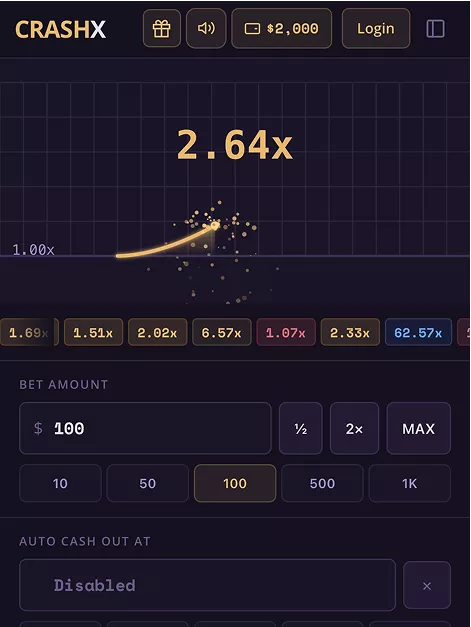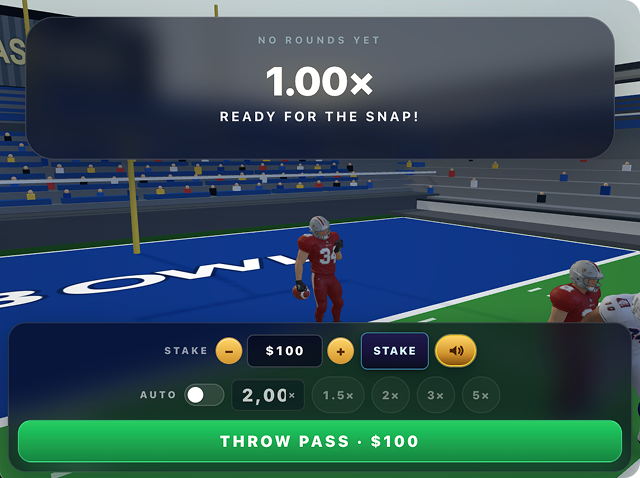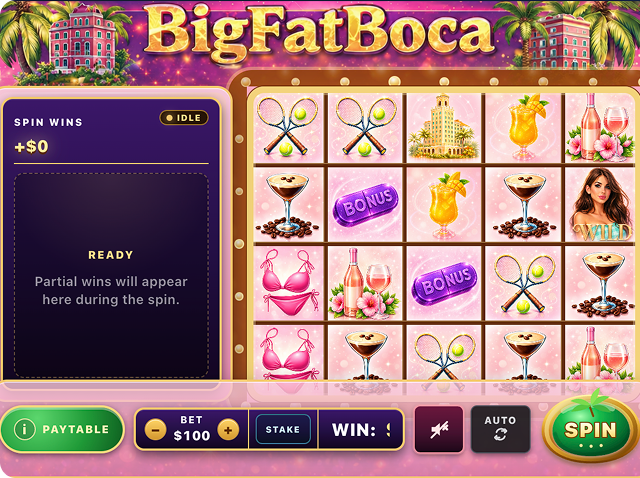

Key Insights
Quick Answer
Your optimal betting pattern is the one that keeps risk consistent across games by accounting for volatility, pace, and your personal tolerance for swings.
Best Way To Get Better Results
Use one anchor bet and a tight range across games, then adjust only with planned rules tied to session structure, not streaks.
Biggest Advantage
You avoid bet-size drift when switching games, which prevents silent risk spikes and emotional blow-ups.
Common Mistake
Players treat every game like it “should” behave the same, then overreact when variance feels different.
Pro Tip
If your pattern requires you to “feel when to press,” it will fail right when the swings get uncomfortable.
Why Betting Patterns Don’t Transfer Cleanly Between Games
A betting pattern is not just a number. It’s how risk shows up over time.
When you switch games, three things often change at once:
- Volatility (how swingy results feel)
- Pace (how many bets happen per hour)
- Feedback intensity (how quickly outcomes push your emotions)
This is why a pattern that feels safe in one game can feel reckless in another.
Even if the bet size is identical, the session rhythm is not.
The Real Goal: Consistent Risk, Not Consistent Bets
“Optimal” doesn’t mean “highest win rate” or “most exciting.”
It means your betting pattern stays inside boundaries you can actually follow across different game environments.
A stable pattern does three jobs:
- Protects your bankroll from sudden spikes
- Protects your mind from chasing
- Protects your strategy from falling apart when you switch games
Step 1: Start With Your Anchor Bet
Your anchor bet is the baseline amount you can place repeatedly without stress.
It’s the bet size you return to after any switch, any break, and any swing.
A good anchor bet has three qualities:
- You can place it for a long time without feeling urgency
- It doesn’t tempt you to “get it back” after a loss
- It still feels fun enough to keep you engaged
This is where most players go wrong. They choose an anchor that’s too high because it feels “serious.”
Then the first cold run hits and they start negotiating.
How To Find Your Anchor Quickly
Use a simple test: if you lost 10 bets in a row at this amount, would you still follow your plan?
If the honest answer is no, your anchor is too high.
Step 2: Build A Betting Range, Not A Single Number
Across multiple games, a range is safer than one fixed bet size.
A range gives you small flexibility without emotional spikes.
A tight range looks like:
- Anchor bet
- Slight step up (planned)
- Max bet ceiling (non-negotiable)
The important part is this: your range is designed before you play.
You do not expand it mid-session because you feel behind or excited.
If you want to understand how bet sizing works as strategic risk distribution, read The Science of Bet Sizing & Strategic Risk Distribution
The “No Surprise Jumps” Rule
Your optimal pattern should never include sudden jumps.
Sudden jumps are usually emotional, and emotional jumps are how strategy collapses.
If you increase bet size, it should be:
- Small
- Planned
- Time-limited
- Easy to reverse back to anchor
Step 3: Adjust For Game Speed
Game speed changes everything because it changes how quickly you’re exposed to variance.
A slow game at $5 per bet can feel manageable.
A fast game at $5 per bet can drain your session bankroll faster than you expected.
This is why optimal patterns depend on pace, not just comfort.
A practical way to adjust:
- Faster games → tighter range and lower max bet
- Slower games → range can be slightly wider (still controlled)
- If you switch to a faster game, reset to anchor immediately
If you want to see how speed changes strategy outcomes, read The Impact of Game Speed on Strategy Effectiveness
The “Total Wagered” Reality Check
Many players focus only on bet size. Professionals pay attention to total wagered.
If you place more bets per hour, your bankroll experiences more variance per hour, even with the same bet amount.
Step 4: Match Your Pattern To Volatility
Volatility is how swingy a game feels.
High volatility creates longer dry spells and bigger spikes. Low volatility feels steadier but can still grind you down.
Your optimal pattern changes based on volatility because your emotional tolerance changes.
Low-volatility pattern traits:
- Anchor is slightly higher (if comfort allows)
- Range remains tight
- Fewer break triggers needed, but still use them
High-volatility pattern traits:
- Anchor is lower
- Max bet ceiling is stricter
- “Pressing” is rare and time-limited
- More breaks to prevent tilt during dry spells
The mistake is using a high-volatility pattern in a low-volatility game or vice versa.
That’s how boredom turns into risk spikes, or dry spells turn into chasing.
Step 5: Decide When You’re Allowed To Change Your Bet Size
Your optimal betting pattern needs rules for adjustment, otherwise it becomes mood-based.
A good adjustment rule answers: when can I increase, when do I decrease, and when do I reset?
Here are three clean adjustment rules that work across games:
Rule 1: Time-block adjustments
You can only adjust bet size at the end of a time block (example: every 20–30 minutes).
No mid-block changes, even if you feel “close.”
Rule 2: Break-trigger reset
After any break, you reset to anchor.
This prevents carrying tilt into a higher risk pattern.
Rule 3: One planned press window
If you like pressing bets, do it once, for a fixed number of bets, then return to anchor.
This prevents the classic “pressing forever” spiral.
A Simple Example With Numbers
Assume your session bankroll is $600 and you plan a two-game night.
You set a stop-loss of $150 and choose a max bet ceiling of $6 across the entire session.
Anchor bet
- $3
Range
- $3–$5 most of the time
- $6 is the absolute ceiling (rare, planned, never emotional)
Game A (slower, steadier feel)
- Start at $3
- After 30 minutes, you may move to $4 if you’re calm and within plan
- If you feel bored, you take a break, not a bet jump
Game B (faster, swingier feel)
- Reset to $3 immediately when switching
- No increases for the first 10 minutes
- Only one press window: 10 bets at $5, then back to $3
Why this works: it keeps risk consistent across different speeds and swing profiles.
What it does not do: chase a streak, “recover losses,” or rely on vibes.
How To Know You Found Your Optimal Pattern
You found your optimal pattern when:
- You can follow it during losing streaks without negotiating
- Switching games doesn’t change your limits or trigger spikes
- You feel less urgency to “fix” the session
- Your worst sessions are less destructive
A pattern that “wins more” for a week but collapses on a bad run is not optimal.
Optimal means survivable and repeatable.
Common Traps To Watch For
Trap one
Using one bet size across every game without adjusting for speed.
This is how “small bets” become expensive just because the pace is high.
Trap two
Treating a bet increase as a solution to frustration.
Frustration needs a break rule, not a risk jump.
Trap three
Expanding your range after a win.
Winning can trigger overconfidence and create a hidden “victory lap” blow-up.
Quick Checklist
Step 1: Choose an anchor bet you can repeat without stress
Step 2: Build a tight range with a non-negotiable max bet ceiling
Step 3: Adjust for speed by tightening range in faster games
Step 4: Adjust for volatility by lowering anchor in swingier games
Step 5: Use time blocks and press windows, not streaks, to adjust
FAQs About Betting Patterns Across Games
Should My Bet Size Be The Same In Every Game?
Not always. Your goal is consistent risk, not identical bets.
Speed and volatility can require a lower anchor in certain games.
What’s The Safest Betting Pattern For Multi-Game Nights?
An anchor bet plus a tight range with strict max bet and stop-loss rules.
Simple patterns survive fatigue and emotion better.
Is It Okay To Raise Bets When I’m Winning?
Only if it’s planned and time-limited.
Unplanned raises after wins often lead to “victory lap” losses.
How Do I Stop Bet-Size Drift When Switching Games?
Reset to anchor on every switch and ban increases for the first few minutes.
That removes the emotional carryover.
How Do I Know If My Pattern Is Too Aggressive?
If a normal cold run makes you want to renegotiate rules, it’s too aggressive.
Your anchor should survive discomfort.
Where To Go Next
Now that you have a betting pattern that works across games, the next step is avoiding the switching mistakes that collapse most strategies.
Next Article: Strategy Mistakes Players Make When Switching Game Types
Next Steps
If you want to start with the basics, read The Complete Guide To Casino Strategies
If you want to tighten bet sizing decisions, read The Science of Bet Sizing & Strategic Risk Distribution
If your goal is to manage switching without chaos, use How To Combine Multiple Game Strategies Into One Plan
Gridzy Hockey is Shurzy’s daily NHL grid game where you pretend you’re just messing around and then suddenly you’re 15 minutes deep arguing with yourself about whether some 2009 fourth-liner qualifies as a 40-goal guy.
If you think you know puck, prove it. Go play Gridzy Hockey right now!