
Key Insights
Quick Answer
New Jersey’s Division of Gaming Enforcement (DGE) regulates online casinos with strict licensing, auditing, and consumer protection standards tied to state law and enforcement.
Best Way To Get Better Results
If you play on NJ-regulated sites, use the DGE’s licensing details to confirm the operator and only use platforms tied to approved Atlantic City casino partners.
Biggest Advantage
DGE oversight provides strong accountability for payouts, marketing standards, game integrity, and dispute handling within a regulated US market.
Common Mistake
Players assume any casino that accepts US players is “legal,” when US legality depends on state regulation and licensed operators.
Pro Tip
If a casino claims “New Jersey regulated” but isn’t tied to a known licensed NJ operator, treat it as a marketing claim until verified.
What The New Jersey DGE Is
The Division of Gaming Enforcement (DGE) is New Jersey’s enforcement and regulatory body for gambling.
In the context of online casinos, it helps oversee licensing, compliance, investigations, and enforcement actions tied to state gambling law.
New Jersey is one of the most established regulated iGaming markets in the United States.
That means “DGE regulated” usually signals a higher level of legal oversight than many international licensing frameworks.
For players, the key value is accountability inside a strong legal system.
That changes what happens when disputes, payout issues, or misleading marketing show up.
Why US State Regulation Feels Different
In many US states, online casino gambling is either:
- regulated under state law (with approved operators), or
- not legal at all
So “regulated in New Jersey” isn’t just a badge.
It means the operator is functioning inside a state framework with enforcement power and compliance expectations.
If you want the general foundation before comparing jurisdictions, read Why Licensing Requirements Differ by Country
How DGE Standards Shape Online Casino Operations
New Jersey regulation tends to be strict about who can operate and how.
Operators usually need to be connected to licensed casino entities and meet state-level compliance standards.
That often affects:
- identity verification (KYC) and age checks
- anti-money laundering practices
- payment handling and withdrawal processes
- responsible gambling tools
- advertising and marketing restrictions
- game integrity requirements
From a player view, this can feel like more friction.
But that friction exists because the system is designed to reduce fraud and protect consumers.
Why Verification Is Often Stricter
NJ-regulated casinos usually perform robust age and identity checks.
This helps prevent:
- underage gambling
- stolen identity account creation
- payment fraud and chargebacks
It also supports stronger dispute handling, because the casino has a verified record of who the account belongs to.
If you want the deeper “why,” read Why Casinos Must Conduct Player Identity Checks
How DGE Oversight Protects Game Integrity
A core function of regulation is ensuring games operate fairly and as advertised.
This involves controls and oversight related to:
- approved game providers
- testing and certification expectations
- audit trails and compliance documentation
- monitoring of operational integrity
In regulated markets like New Jersey, game providers and operators are expected to follow strict standards, which reduces the chance of untested or manipulated software.
If you want the technical breakdown of fairness checks, read How Regulators Audit RNG Fairness & RTP Accuracy
Why This Matters For RTP And Transparency
In regulated environments, operators are under more pressure to provide clarity in rules, disclosures, and consumer treatment.
That doesn’t mean every game is “better,” but it does mean the system is built to reduce shady surprises.
How DGE Handles Complaints And Enforcement
The real test of a regulator is enforcement.
A strong regulator doesn’t just issue licences—it responds when operators break rules.
DGE oversight can include:
- investigations into operator conduct
- enforcement action when standards are violated
- penalties, restrictions, or licence consequences
- oversight of compliance systems and reporting
From the player side, enforcement changes the operator’s incentives.
A casino is less likely to ignore repeated issues when it knows there can be real consequences.
Why This Can Improve Payout Reliability
No regulator can guarantee perfect withdrawals.
But stricter oversight tends to reduce repeated “stall tactics,” because patterns can trigger investigation and penalties.
That’s one of the main reasons players trust regulated US markets more for real money play.
A Simple Example With Numbers
A Simple Example With Numbers
Imagine 1,000 players request withdrawals this month on a regulated platform.
If 50 complaints come in about unclear bonus enforcement or payout delays, that pattern can become visible to compliance and oversight processes.
In a strict market:
- repeated complaints can trigger scrutiny and corrective action
- operators are incentivised to fix issues before they become enforcement problems
In a weak market:
- complaints often loop through support with little pressure to change
- bad patterns can repeat for longer
Same 50 complaints.
Different likelihood of real change—because enforcement strength changes behaviour.
How Players Can Verify New Jersey Regulation
For US players, “legal” is not a vibe—it’s a specific licensing status tied to the state.
A casino claiming New Jersey regulation should have:
- clear licensing disclosures
- connection to licensed operators in the state
- transparent terms and complaint steps
- responsible gambling tools
If details are vague, treat it as unverified until you confirm it.
What To Look For On The Site
Check for:
- operator identity and company name
- licensing statements that are consistent across pages
- terms that clearly describe withdrawals and promotions
- links to responsible gambling resources
If anything is hidden, that’s not a good sign in a strict regulated market.
Common Traps To Watch For
Common Traps To Watch For
Trap one
A casino says “US legal” or “NJ regulated” but provides no licensing disclosures or operator details.
Trap two
A site accepts US players but is not tied to a regulated state market—meaning legality claims are marketing, not regulation.
Trap three
Promotions look extremely aggressive compared to typical regulated US sites, suggesting the operator may not be under strict oversight.
Quick Checklist
Keep this short and scannable.
Step 1: Confirm the casino clearly states New Jersey regulation and identifies the licensed operator.
Step 2: Check the brand’s legal operator name in its terms and footer disclosures.
Step 3: Verify responsible gambling tools (limits, self-exclusion) exist and are easy to use.
Step 4: Read withdrawal rules and bonus terms before you deposit.
Step 5: If regulation details are vague, choose another casino instead of trusting the claim.
FAQs About New Jersey DGE Regulation
Is New Jersey Considered A Strict iGaming Market?
Yes, it’s widely treated as one of the more established regulated iGaming markets in the US.
Operators must meet state requirements and follow compliance standards.
Does DGE Regulation Guarantee I’ll Always Get Paid Fast?
No regulator can guarantee speed in every case.
But stronger oversight and enforcement can reduce repeated payout issues and improve accountability.
Can Offshore Casinos Be “Legal In New Jersey”?
No. New Jersey legality depends on being licensed under the state’s regulated framework.
If a casino is offshore-only, it’s not part of that legal system.
Why Are NJ Casinos More Strict With Verification?
Because they must confirm age and identity under regulated standards.
This reduces fraud and supports better dispute handling.
What Should I Do If A Casino Claims NJ Regulation But Looks Vague?
Don’t assume it’s real.
Look for licensing disclosures and operator identity and only play once you can confirm legitimacy.
Where To Go Next
Now that you understand New Jersey’s standards, the next step is learning how Pennsylvania regulates iGaming and how its system compares.
Next Article: Pennsylvania Gaming Control Board: iGaming Regulation
Next Steps
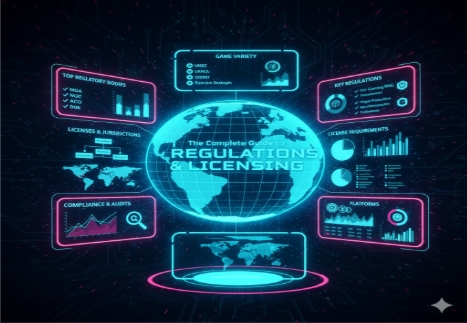
If you want to start with the basics, read The Complete Guide to Casino Regulations & Licensing
If you want to go one step deeper, read Pennsylvania Gaming Control Board: iGaming Regulation
If your goal is to understand identity checks, use Why Casinos Must Conduct Player Identity Checks
Gridzy Hockey is Shurzy’s daily NHL grid game where you pretend you’re just messing around and then suddenly you’re 15 minutes deep arguing with yourself about whether some 2009 fourth-liner qualifies as a 40-goal guy.
If you think you know puck, prove it. Go play Gridzy Hockey right now!