
Key Insights
Quick Answer
Online casino licensing is a legal approval process where a regulator verifies the operator, sets rules, and monitors the casino to protect players.
Best Way To Get Better Results
Check the licence number on the regulator’s official site before you deposit, then play only on casinos that make terms and complaints easy to find.
Biggest Advantage
You reduce the risk of getting stuck with slow payouts, unclear rules, or a casino that disappears when money is on the line.
Common Mistake
Players trust a “licensed” badge without verifying the licence holder name, licence number, and licence status.
Pro Tip
If a casino hides its licence details in tiny text or won’t show a real regulator link, treat it like an unverified site until proven otherwise.
What “Licensed” Actually Means For An Online Casino
A licence is not a vibe. It’s a legal permission slip.
It means a regulator approved a specific company to operate casino games under specific rules.
That’s why the licence holder name matters.
The casino brand you see on the site is not always the legal company behind it.
When you verify a licence, you’re really checking:
- the company name (licence holder)
- the licence number
- the regulator that issued it
- whether the licence is active and in good standing
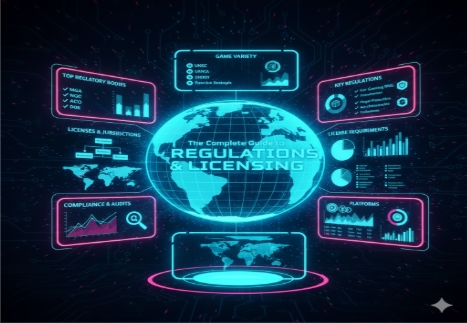
If you want the simple version of the bigger topic, read The Complete Guide to Casino Regulations & Licensing
Why This Matters In Real Money Play
When you play at an online casino for real money, you’re trusting the casino with:
- your deposit
- your personal details
- your withdrawal request
- your right to complain if something feels unfair
A licence does not guarantee everything is perfect.
But it gives you a framework where rules exist and enforcement is possible.
How A Casino Applies For A Licence
Licensing is usually a multi-step process.
Regulators want to know two main things: “Who are you?” and “Can we trust you with player money?”
While the steps vary by jurisdiction, most licensing processes include:
- company registration checks
- background checks on owners and key staff
- financial checks (funding, reserves, stability)
- technical reviews (systems, security, game fairness testing)
- policy reviews (KYC, AML, responsible gambling tools)
It’s not just paperwork.
It’s a risk screen designed to keep the worst operators out.
What “Due Diligence” Looks Like
Due diligence is the regulator’s deep check.
It’s where they look for anything that suggests the casino might be unsafe, unstable, or dishonest.
They often review:
- ownership and control (who actually calls the shots)
- business history and reputation
- funding sources and banking relationships
- internal controls (how issues are reported and fixed)
- third-party partners (payment providers, game providers, auditors)
If you want to understand why financial checks matter, read How Regulators Evaluate Casino Financial Stability
What Regulators Check Before Approval
A regulator doesn’t just ask, “Can you run a website?”
They ask, “Can you run a fair casino that won’t harm players?”
Common approval checks include:
- identity verification systems (to prevent underage play and fraud)
- anti-money laundering processes
- data privacy and cybersecurity policies
- complaint handling and dispute steps
- responsible gambling tools (limits, timeouts, self-exclusion)
- technical testing for games (RNG and RTP reporting)
This is where “online casino legit” starts to become more than a marketing claim.
The rules are supposed to force minimum standards.
The Part Players Notice Most: Terms And Payout Behaviour
Most players don’t feel the licence during gameplay.
They feel it when:
- they try to cash out
- they hit a KYC request
- a bonus term becomes a problem
- support stops being helpful
Licensing requirements often shape what casinos can put in their terms.
And how they must treat complaints and disputes.
What Happens After A Casino Gets Licensed
A licence is not “one-and-done.”
Good regulators keep monitoring after approval.
That monitoring can include:
- ongoing compliance reporting
- periodic audits and technical checks
- reviews of advertising and bonus promotions
- complaint tracking and dispute outcomes
- investigations into suspicious behaviour (fraud, collusion, cheating)
This is why two licensed casinos can feel totally different.
Some regulators are strict and active. Others are lighter and slower.
How Monitoring Protects Players
Monitoring creates pressure.
It raises the cost of bad behaviour.
If a casino racks up repeated complaints, it can trigger reviews, penalties, or even licence action.
That doesn’t mean every problem gets solved instantly, but it changes the incentive.
If you want to see what regulators check for fairness, read How Regulators Audit RNG Fairness & RTP Accuracy
A Simple Example With Numbers
A Simple Example With Numbers
Let’s say two casinos each have 10,000 active players this month.
If 1% of players complain, that’s 100 complaints per casino.
Casino A is under a strict regulator that tracks complaint rates and payout delays.
Casino B is under a lighter regulator that rarely follows up unless there’s a big public issue.
Now picture 50 withdrawal delays happen this week.
- Casino A risks getting flagged if delays and complaints spike together.
- Casino B might keep delaying because players have fewer real paths to escalate.
So even if both casinos say “licensed,” the player experience can differ fast:
- stricter oversight pushes faster fixes
- weaker oversight makes stalling easier
How To Verify A Casino Licence Before You Deposit
This is the easiest way to protect yourself.
And it takes less time than choosing a slot.
What to look for in the footer:
- licensing authority name
- licence number
- licence holder name
- a way to verify (or enough details to search it)
- complaint contact info
If any of those are missing, treat the licence claim as unverified.
Legit operators don’t hide this stuff.
Common Traps To Watch For
Trap one
A licence badge image with no licence number and no real regulator listed.
Trap two
A licence holder name that doesn’t match anything when you search it.
Trap three
A casino that makes complaint steps hard to find, then gets strict only after you win.
Quick Checklist
Keep this short and scannable.
Step 1: Scroll to the footer and find the regulator name, licence number, and licence holder name.
Step 2: Search the licence number on the regulator’s official site (not on the casino site).
Step 3: Confirm the licence status is active and the company name matches.
Step 4: Check the casino’s complaint process and contact info before you deposit.
Step 5: If details are missing or unclear, pick a different online casino best option instead.
FAQs About How Online Casino Licensing Works
Is A Licensed Online Casino Always Safe?
No, but it’s usually safer than an unlicensed site.
A real licence adds accountability and a regulator that can step in when rules get broken.
Why Do Some Casinos Have More Than One Licence?
They may serve multiple markets, and each market has different laws.
Multiple licences can also signal stronger compliance, depending on who issued them.
What If A Casino Says It’s Licensed But I Can’t Verify It?
Treat it as unverified until you can confirm the licence on a regulator site.
A trustworthy casino makes verification easy because it builds player trust.
Do Licences Cover Bonus Rules Too?
Often, yes. Many regulators require clear bonus terms and fair advertising.
But you should still read the key terms before you claim a big offer.
What Should I Do If I Have A Dispute With A Licensed Casino?
Follow the casino’s complaint steps first and keep screenshots.
If needed, escalate using the regulator details shown on the licence listing.
Where To Go Next
Now that you understand how licensing works, the next step is learning the difference between regulation, licensing, and certification.
Next Article: The Difference Between Regulation, Licensing & Certification
Next Steps
If you want to start with the basics, read How Online Casino Licensing Works: A Complete Overview
If you want to go one step deeper, read The Difference Between Regulation, Licensing & Certification
If your goal is to understand what regulators check, use How Regulators Evaluate Casino Financial Stability
Gridzy Hockey is Shurzy’s daily NHL grid game where you pretend you’re just messing around and then suddenly you’re 15 minutes deep arguing with yourself about whether some 2009 fourth-liner qualifies as a 40-goal guy.
If you think you know puck, prove it. Go play Gridzy Hockey right now!