
Key Insights
Quick Answer
International treaties don’t usually “legalise gambling,” but they support cross-border cooperation on fraud, money laundering, data sharing, and enforcement—making online gambling regulation more effective.
Best Way To Get Better Results
Use casinos licensed in jurisdictions with strong cooperation and enforcement, and avoid operators that hide ownership or rely on evasive cross-border structures.
Biggest Advantage
Treaties and cooperation frameworks help regulators and law enforcement coordinate against fraud, illegal operators, and suspicious payment activity across borders.
Common Mistake
Players assume international treaties “control” online gambling directly, when most treaties support cooperation on crimes and enforcement rather than setting gambling rules themselves.
Pro Tip
If a casino looks built for jurisdiction hopping (hidden operator, shifting domains, weird payment routes), that’s often a sign it’s trying to outrun cross-border enforcement pressure.
Why Online Gambling Creates A Cross-Border Legal Problem
Online casinos can operate across multiple countries at the same time.
That creates conflicts like:
- one country licenses the operator
- another country bans online casinos
- another country hosts the servers
- another country processes the payments
So when something goes wrong—fraud, money laundering, payment disputes—questions appear fast:
- who has authority?
- which law applies?
- who can investigate?
- who can force the operator to comply?
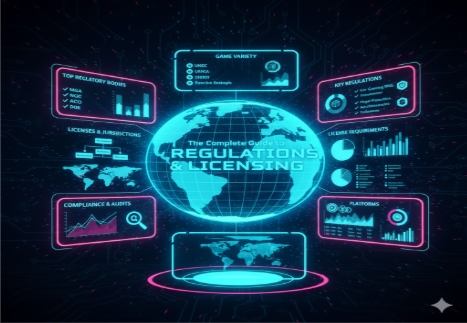
International treaties and cooperation frameworks help reduce those gaps by enabling countries to work together on enforcement and crime prevention.
If you want to understand how regulators cooperate in practice, read How Gaming Jurisdictions Share Intelligence Across Borders
What International Treaties Typically Do (And Don’t Do)
This is the key clarity point.
Treaties Usually Don’t Set Gambling Rules
Most countries set gambling legality through their own laws.
Treaties rarely say “online gambling is legal” or “online gambling is banned.”
Treaties Often Support Enforcement Cooperation
Treaties are more likely to support:
- mutual legal assistance (sharing evidence and legal requests)
- extradition cooperation (in serious crime cases)
- anti-money laundering standards and cross-border reporting
- cybercrime cooperation
- information sharing for fraud and financial crime
So treaties make it easier to pursue operators and networks that cross borders—even if gambling legality differs by country.
The Biggest Treaty-Linked Areas That Affect Online Casinos
Even if treaties don’t define gambling law, they influence the parts of online gambling that matter most: money, identity, and enforcement power.
Anti-Money Laundering Cooperation
AML is one of the most treaty-linked areas because money laundering is global.
International frameworks and cooperation standards push countries to:
- share suspicious activity intelligence
- standardise risk controls
- strengthen reporting and recordkeeping expectations
This is why AML rules feel similar across many regulated markets.
If you want the player-facing impact of AML compliance, read How Anti-Money Laundering Laws Impact Online Casinos
Cybercrime And Fraud Cooperation
Online casinos can be targets and tools for cybercrime:
- payment fraud
- identity theft
- account takeovers
- bot networks and collusion rings
International cooperation frameworks make it easier to investigate cybercrime across borders, especially when infrastructure and suspects are in different countries.
Payment Channel Enforcement
Governments often enforce gambling restrictions by targeting payments.
Cross-border cooperation helps with:
- identifying high-risk payment processors
- enforcing restrictions through banking systems
- stopping fraudulent payment routes
This is one reason unlicensed casinos lean on odd payment methods—they’re dodging pressure from regulated financial networks.
If you want to understand evasion patterns, read How Unlicensed Casinos Bypass Legal Systems
Evidence Sharing And Legal Requests
When an operator is offshore, enforcement often requires evidence from multiple countries:
- server logs
- corporate ownership records
- transaction traces
- communications and investigation materials
Mutual legal assistance frameworks help authorities request and share this evidence legally.
Without cooperation frameworks, a lot of investigations die in paperwork.
How Treaties Influence Licensing And Regulation Indirectly
Treaties can shape how regulators design licensing systems by pushing:
- stronger recordkeeping requirements
- tighter AML rules
- cybersecurity expectations
- data sharing practices
- cooperation between jurisdictions
So while treaties don’t “license casinos,” they influence the standards regulators expect casinos to meet.
This matters because regulated casinos have to build compliance systems that satisfy both local law and international compliance norms.
A Simple Example With Numbers
A Simple Example With Numbers
Imagine an unlicensed operator runs 3 casino brands across 4 countries.
Players in Country A report withdrawal fraud and identity theft.
To investigate, authorities may need:
- server logs from Country B
- payment processor information from Country C
- company ownership records from Country D
Without cooperation frameworks, those requests can stall or fail.
With mutual assistance cooperation, evidence can move faster, allowing:
- enforcement action
- asset freezes (in some cases)
- disruption of payment rails
- domain takedowns
The point: cross-border tools don’t “ban casinos,” but they make enforcement against criminal behaviour more realistic.
What This Means For Players
Players don’t need to memorise treaties.
But you should understand the practical outcome:
- stronger cooperation usually means stronger enforcement
- stronger enforcement usually means more accountability
- more accountability usually means fewer “disappear overnight” operators
So if a casino is licensed in a jurisdiction that participates in international cooperation and maintains transparency, you’re more likely to have:
- stable payment rails
- clearer complaint pathways
- predictable enforcement consequences for operators
If you want the practical player step, read How Players Can Check a Casino’s License Validity
Common Traps To Watch For
Common Traps To Watch For
Trap one
Assuming international treaties make gambling universally “legal” or “safe.”
They mostly support enforcement cooperation, not legality decisions.
Trap two
Thinking offshore structure automatically means legitimacy.
Offshore can also be used to hide ownership and avoid accountability.
Trap three
Ignoring payment weirdness. Strange deposit methods often signal an operator is avoiding regulated financial systems.
Quick Checklist
Keep this short and scannable.
Step 1: Verify the casino’s licence holder name and licence status.
Step 2: Prefer jurisdictions known for transparency and enforcement cooperation.
Step 3: Avoid casinos with hidden ownership, shifting domains, or unclear contact info.
Step 4: Watch payment methods—stable payment rails usually signal higher accountability.
Step 5: If you can’t verify who runs the casino, don’t deposit.
FAQs About Treaties And Online Gambling Law
Do International Treaties Make Online Gambling Legal?
Usually, no. Gambling legality is set by national laws.
Treaties mostly support cooperation on enforcement, fraud, and financial crime.
Why Do AML Rules Feel Similar Across Countries?
Because money laundering is global and many countries adopt shared standards and cooperation frameworks.
That pushes casinos toward similar compliance systems.
Can Treaties Help Shut Down Unlicensed Casinos?
They can help indirectly by enabling evidence sharing, coordinated enforcement, and payment disruption.
But shutdown speed still depends on each country’s enforcement strength.
Does Cross-Border Cooperation Protect Player Withdrawals?
It can, because stronger enforcement reduces the number of operators that can evade accountability.
But you still need to choose licensed, transparent casinos for real protection.
What’s The Best Player Move In A Cross-Border World?
Verify licensing and operator identity before depositing.
A casino built for transparency is usually safer than a casino built for evasion.
Where To Go Next
Now that you understand treaties and cross-border law frameworks, the next step is learning how casino servers must be hosted for legal compliance and why hosting location matters.
Next Article: How Casino Servers Must Be Hosted for Legal Compliance
Next Steps
If you want to start with the basics, read How Gaming Jurisdictions Share Intelligence Across Borders
If you want to go one step deeper, read How Casino Servers Must Be Hosted for Legal Compliance
If your goal is to understand unlicensed evasion tactics, use How Unlicensed Casinos Bypass Legal Systems
Gridzy Hockey is Shurzy’s daily NHL grid game where you pretend you’re just messing around and then suddenly you’re 15 minutes deep arguing with yourself about whether some 2009 fourth-liner qualifies as a 40-goal guy.
If you think you know puck, prove it. Go play Gridzy Hockey right now!